
Jan 18, 2026
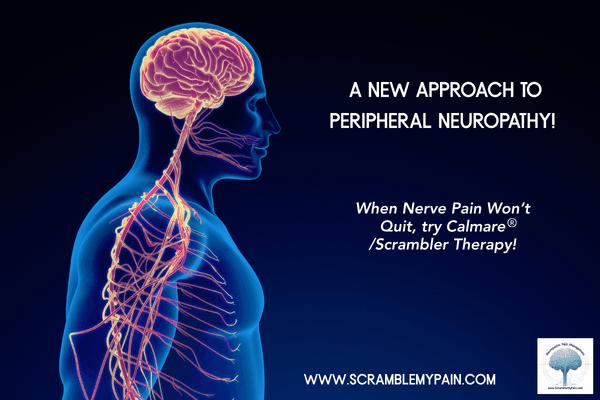
Peripheral neuropathy can be exhausting, frustrating, and life-limiting. Burning, tingling, electric shocks, numbness, hypersensitivity, no feeling at all, or deep aching pain can make it difficult to sleep, walk, work, or enjoy daily life. For many patients, medications only partially help, or come with side effects that feel just as disruptive as the pain itself.
Scrambler Therapy® or Calmare® Therapy offers a different approach. Instead of masking pain, it works to retrain how the nervous system processes pain signals, and it has shown remarkable success for many people with peripheral neuropathy of all types.
What Is Calmare/Scrambler Therapy?
Calmare/Scrambler Therapy is a non-invasive, FDA-cleared treatment designed specifically for chronic neuropathic pain. It uses surface electrodes placed on the skin near the painful area to deliver gentle electrical signals—not shocks, and not stimulation meant to “block” pain like a TENS unit.
Instead, Calmare/Scrambler Therapy sends synthetic “non-pain” signals through the same nerves that are currently sending pain messages to the brain.
The goal is simple but powerful:
replace pain information with normal, non-pain information.
How Calmare/Scrambler Therapy Works
In peripheral neuropathy, damaged or dysfunctional nerves continuously send incorrect pain signals to the brain, even when no tissue damage is happening. Over time, the brain learns this pain and begins to expect it.
Calmare/Scrambler Therapy interrupts this cycle.
During a session:
Electrodes are placed on healthy skin surrounding the painful area
The device delivers sequences of electrical signals that mimic normal nerve communication
These signals travel along the same nerve pathways as pain
The brain receives “safe” information instead of pain information
With repeated sessions, the nervous system can begin to relearn how to interpret signals correctly, often resulting in lasting pain reduction.
This is not just temporary distraction. For many patients, relief continues well after treatment ends.
Why Calmare/Scrambler Therapy Is Especially Effective for Peripheral Neuropathy
Peripheral neuropathy is one of the conditions where Calmare/Scrambler Therapy truly shines, because the pain is nerve-based rather than structural.
Calmare/Scrambler Therapy has been used successfully for many types of peripheral neuropathy, including:
Diabetic neuropathy
Chemotherapy-induced peripheral neuropathy (CIPN)
Idiopathic neuropathy (unknown cause)
Post-surgical nerve pain
Post-herpetic neuralgia (shingles)
Small fiber neuropathy
Neuropathy related to autoimmune conditions
Nerve damage from injury or compression
Many patients seeking Calmare/Scrambler Therapy have already tried medications such as gabapentin, pregabalin, antidepressants, opioids, or topical treatments with limited success, or intolerable side effects. Calmare/Scrambler Therapy offers a drug-free alternative that targets the root problem: faulty nerve signaling.
What Does Treatment Feel Like?
Calmare/Scrambler Therapy should not be painful. In fact, one of the keys to success is adjusting the stimulation so that the patient feels a comfortable, pleasant sensation, often described as buzzing, tapping, or gentle movement, without pain.
Sessions typically last about 30–45 minutes, and most treatment plans involve a series of sessions over consecutive days. Many patients notice improvement within the first few treatments, with pain continuing to decrease as sessions progress.
Can Calmare/Scrambler Therapy Help If You’ve Had Neuropathy for Years?
Yes. One of the most encouraging aspects of Calmare/Scrambler Therapy is that chronic pain, even pain present for many years, can still respond. The nervous system remains adaptable, and Calmare/Scrambler Therapy takes advantage of this neuroplasticity.
While results vary from person to person, many patients experience:
Significant pain reduction
Improved sensation
Better sleep
Increased mobility
Reduced reliance on medications
Improved quality of life
Is Calmare/Scrambler Therapy Right for You?
Calmare/Scrambler Therapy may be a good option if you:
Have peripheral neuropathy that has not responded to medication
Want to avoid increasing medications or side effects
Prefer a non-invasive, non-drug approach
Have chronic nerve pain that interferes with daily life
A proper evaluation is important to determine whether Calmare/Scrambler Therapy is appropriate for your specific type of neuropathy and pain pattern.
A Different Way Forward for Neuropathy Pain
Living with peripheral neuropathy can feel like an endless cycle of trial and error. Calmare/Scrambler Therapy offers a different path, one that focuses on resetting pain communication rather than suppressing symptoms.
If you suffer from peripheral neuropathy and are looking for new options, Calmare/Scrambler Therapy may be worth exploring. For many patients, it has provided meaningful relief when nothing else worked. To search for a provider near you, use our handy provider directory found here!