Nov 14, 2025

Sandra Burkhart, DFM, CLT
Chronic pain can be isolating, confusing, and exhausting. I never realized this until it happened to me and I felt so alone, helpless and misunderstood. When an ankle injury lingered far longer than it should have, I found myself on a path I hadn’t anticipated: a diagnosis I didn’t fully understand, and an initial treatment plan that almost seemed to push me toward pills rather than relief. This is the story of how I navigated that path, discovered Calmare Scrambler Therapy, and found a route back to living life without the constant shadow of pain and illness.
The Beginning: An Injury That Didn’t Heal
I initially injured my ankle figuring that it would recover like most minor injuries do. A month passed, it started to get better, but then I re-injured it. Months passed, and despite immobilization, extensive tests, and countless medical opinions, there was no clear problem that explained the persistent pain. The lack of answers left me feeling frustrated and uncertain about the road ahead. I was even forced to take time off work because I could no longer perform my daily work functions.
For four long, excruciating months, I struggled and searched for non-pharmaceutical options. I kept hoping for improvement, but instead it seemed to get worse. The medical team continued pursued the usual routes—imaging, tests, PT, immobilization—but the results remained inconclusive.
The Moment of Clarity: The CRPS Diagnosis
I begrudgingly went to a physical therapist (PT) even though I could barely walk or drive at that point. I assumed it would be a waste of time, but within 5 minutes of sitting down with the PT and answering a few questions, he told me what he suspected, Complex Regional Pain Syndrome, CRPS for short. He was able to diagnose it based upon something called the Budapest Criteria.
I remember when he said it, I had never heard of that word before so I had no idea what it was or how serious it could be. He didn't say much more, but told me he was going to call my doctor and my doctor would call me for next steps.
So what in the heck is it? CRPS is a complex and often misunderstood condition that can follow an injury and cause ongoing, amplified pain, changes in skin color and temperature, swelling, and functional impairment. It does not present the same for everyone and most traditional doctors know little to nothing about it. It's called the "suicide disease" and there is no cure.
Well that sounded pretty awful so I immediately explored treatment options. What stood out most was the realization that the conventional approach of “more meds” or invasive surgeries and procedures with only minimal results wasn’t appealing to me. I felt like my medical team was just shoving me to the side now that I had a diagnosis. But I could sense there was a better path—one that emphasized healing, empowerment, and evidence-based options without such invasiveness on the body. I already knew red and infrared light therapy was helping so I was on a mission to find other options!
Exploring Alternatives: A Crucial Shift in Perspective
My doctor’s default response was to pursue medication initially. That was followed by discussions about injections, implants and spinal cord stimulations. I knew that path could carry risks and might not address the underlying issues causing the pain because everything I read about the disease indicated that it was affecting the nervous system. As a Certified Light Therapist, I was already well aware of the importance of a properly functioning nervous system and how stress and mental health can affect it.
I sought alternatives, driven by a belief that there must be options that could restore function and reduce pain without becoming a lifelong medication routine. I already knew red and infrared light therapy was effective for my pain and inflammation management at home (shameless plug for my company here). But a pivotal moment came while researching one particular treatment option: Calmare Scrambler Therapy. I learned it was being used for CRPS with encouraging outcomes in many patients. In fact, I was lucky enough to connect with a patient headed to a provider for Calmare Scrambler Therapy treatment and I followed her successful journey which was so encouraging to me! Similar to me, she had been diagnosed about 6 months prior and she had amazing results during her two weeks of therapy!
From my research, I discovered that Calmare Scrambler Therapy is designed to recalibrate nerve signaling and modulate pain perception, providing a non-opioid approach to chronic pain management. It wasn’t a guaranteed cure, but it offered a compelling possibility to potentially regain my life. It sounded exactly like what I was looking for. Similar to a TENS unit, with a built in algorithm that was invented by a professor in Rome. To learn more about what to expect from the treatment process, read more here.
Finding the Right Provider: A Lucky Break
When I first began exploring the therapy, I learned finding an experienced provider was going to be important for treating CRPS. I was originally planning to see the same doctor the other patient had seen, but Florida was far from me. Calmare Scrambler Therapy isn’t widely available everywhere, but I decided to google it since Los Angeles isn't too far from me. I was fortunate to find a provider about 40 miles from my home. It was still a bit of a drive, but close enough to give it a try! It was the best decision I ever made.
The Calmare/Scrambler Therapy Experience
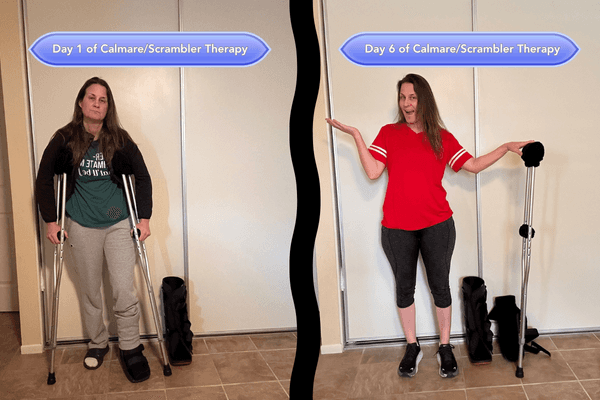
I arrived at the office on crutches, heading toward a wheelchair—feeling defeated and uncertain about my future. Within a week, I was back on my feet, ditching the crutches, and starting to reclaim my life again. After completing the final week of therapy, I felt a renewed sense of normalcy and capability. It has been a long road to recovery and I have needed more therapy as a result of injuries. But I now have the confidence to live without the constant fear of the next “accident” or flare-up. Do I still need boosters now and then, absolutely, but the fear and the daily powerlessness are no longer there! I have found something that keeps me healthy now!
Calmare Scrambler Therapy helped rewire pain signaling in a way that allowed my nervous system to reset and function more like it did before the injury. It wasn’t a single-lightning-fast miracle, but a steady recovery that rebuilt confidence, mobility, and daily enjoyment. The continuous, consistent therapy over time has created a much more permanent result for me.
The Aftermath: Living, Not Lingering
The therapy didn’t erase every trace of discomfort, but it transformed the experience from chronic, debilitating pain to manageable, controllable pain with a real path to living fully. I no longer live in fear of the next flare-up. I have the tools, physicians, and support system to respond quickly and effectively. Even when I do have a flare up, it’s typically very short lived and much more manageable than it used to be. I remain engaged in my ongoing wellness, with booster sessions as needed, to maintain the gains I’ve achieved.
Why This Path Was Worth It
It provided an alternative to a reliance on medications, offering a non-pharmacologic route to relief. It allowed me to explore safe, non-invasive options before heading down a more permanent, invasive path. It connected me with a compassionate, experienced clinician who treated me as a person, not just a diagnosis. It empowered me to take an active role in my recovery, rather than passively waiting for a miracle.
If you’re navigating a similar journey, here are a few thoughts that helped me:
Advocate for yourself: Seek second opinions and explore therapies with evidence supporting their use in CRPS.
Research carefully: Not every therapy works for every person, but understanding options helps you make informed decisions.
Build a supportive team: A clinician who listens and a network of friends or family can make a big difference during recovery.
Consider multiple therapies and options. I found that red and infrared light therapy, pulsed electromagnetic field therapy (PEMF), vagus nerve stimulation, and water therapy are all super effective for my body and overall healing.
Focus on gradual gains: Recovery can be incremental. Celebrate small milestones as you work toward larger goals.
You have nothing to lose and everything to gain. Check out this comprehensive scrambler therapy provider map here. You can see who might be in your area and schedule a free consultation. Don't wait!